top of page
car.png
Before Landing (2025)

Spacial Exhibition and Interactive Installation

Project

Individual

Tools Used

Maya, Touchdesigner, Lasercut, Illustrator
Background Research

Human fossil fuel use has driven COâ‚‚ from 280ppm to dangerous levels since 1750, causing accelerating global warming despite brief cooling from industrial aerosols. Human activities have pushed warming past 1°C, made 2023 the hottest year on record, and are driving Earth toward the critical 1.5°C threshold in the 2030s.

Group 13.png
Group 14.png

Crisis of Antarctica

Human fossil fuel use has driven COâ‚‚ from 280ppm to dangerous levels since 1750, causing accelerating global warming despite brief cooling from industrial aerosols. Human activities have pushed warming past 1°C, made 2023 the hottest year on record, and are driving Earth toward the critical 1.5°C threshold in the 2030s.

Group 16.png

Ice mass variation in Antarctica 2002-2025 (Gigatonnes)

Group 17.png

Projected Decline of Emperor Penguin Populations

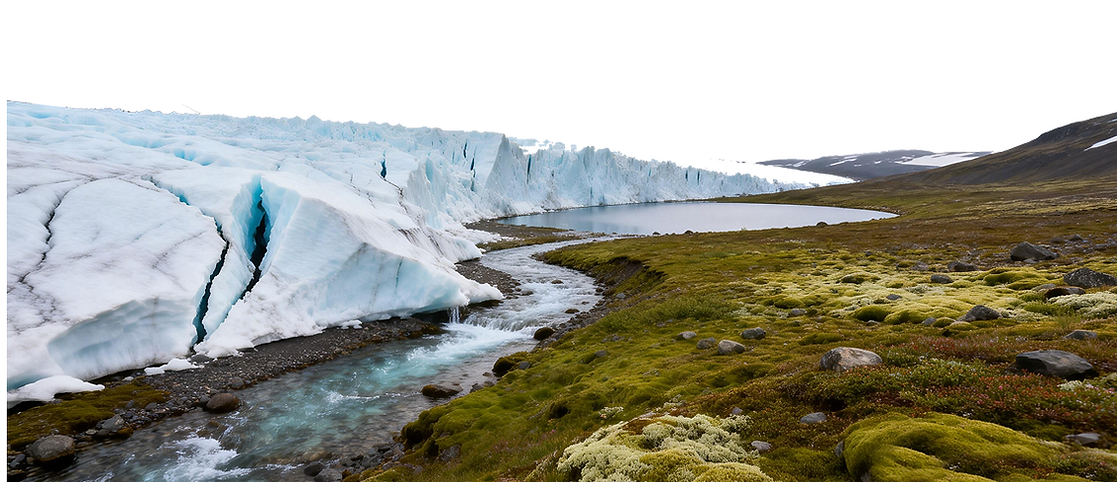
Rapid Ice Sheet and Glacier Melting is the major crisis in Antarctica. The IPCC AR6 Report classifies Antarctic​

ice-sheet loss as an area of “very high risk and potential irreversibility.” The loss of glaciers triggers cascading effects, such as greater solar absorption leading to further warming, and threatens biodiversity and food web collapse.


Meanwhile, Antarctica is turning green, with vegetation increasing more than tenfold.

antarctica-1.jpg

I began investigating Antarctic tourism routes and tracing the standardized journeys. I became interested in how ecological impact is set in motion before arrival. 

Group 19.png

Project Ideation

WHERE

The installation is located in a southern harbor that functions as a pre-departure site where travelers can pause before entering the Antarctic system.

generated_logo_carrier_logo_Barcadera,_Aruba_00001_ 1.png
ship 1.png

HOW

A ship attracts visitors and houses an exhibition space that frames the journey ahead, encouraging a sense of responsibility toward the fragile ecosystem they are about to enter.

WHAT

Inside the ship, visitors move through an immersive spatial experience that combines informative Antarctic content with a carousel-like interactive installation using projection and camera sensing to register human presence.

AdobeStock_800971732 1.png

Awareness-raising mechanisms

Group 20.png
Group 21.png

Making the Invisible Perceptible


Moss is transformed to particles, which visualizes an otherwise invisible environmental variable, allowing the viewers to perceive the change as an immediate condition.

Creating an Immersive Spatial Environment

​

Inside the ship’s interior, the interactive installation situates in a dark room. Viewers slow down, stay longer, and remain physically close to it.

Bodily perception as cognitive feedback

​

When viewers engage with a space through bodily presence, duration, and proximity, perception shifts from detached observation to self-awareness.

Group 22.png

I argue that consciousness is not formed through knowledge input alone, but also through embodied experience. Thus, I translate environmental issues into mechanisms that can be perceived through the body, triggered through action, and reinforced through systemic feedback.

Group 23.png

Branding Design

Group 24.png

I use a penguin skeleton as my logo to represent the structural vulnerability of Antarctic wildlife.

The penguin-bone carousel represents Antarctica as a lost paradise once a thriving habitat for wildlife now defined by irreversible ecological fragility.

I constructed the frame of the carousel using acrylic and plywood.

Rectangle 286.png

Concept

Using departure cities for Antarctic cruises as a network, I integrate physical spaces to provide interactive spatial experiences for prospective Antarctic travelers.

Group 292.png

In collaboration with Antarctic expedition operators and research stations

An interactive installation that alters the visual appearance of moss in response to human presence and movement.

Visitors can purchase penguin skeleton souvenirs as tangible reminders of Antarctic ecological fragility.

Collaboration

Installation

Souvenir

Group 292.png

Visitors are drawn from the entrance toward a rotating installation of penguin skeletons suspended beneath an ice-like canopy.

The corridor walls feature ice-fragment textures. An embedded screen provides educational content on Antarctic ecosystems through interactive games and quizzes.

Through real-time image processing, the system detects approaching bodies and responds by amplifying moss density and growth patterns.

Group 293.png

The distorted skeletons symbolize habitat compression caused by human-induced climate change. As glaciers retreat, penguin territories shrink and fragment. The twisted forms embody this spatial violence, making abstract environmental pressure viscerally tangible.

Technology

Screenshot 2025-12-30 at 10.58.38 AM.png
Screenshot 2025-12-30 at 11.11.33 AM.png
Group 295.png

Souvenir Design

MAGNET SET

fridge.png

Form: Dorsum

Form: Pivot

Form: Costa

Installation

Group 25.png

© 2025 Zoey Zhang, all rights reserved 

bottom of page